

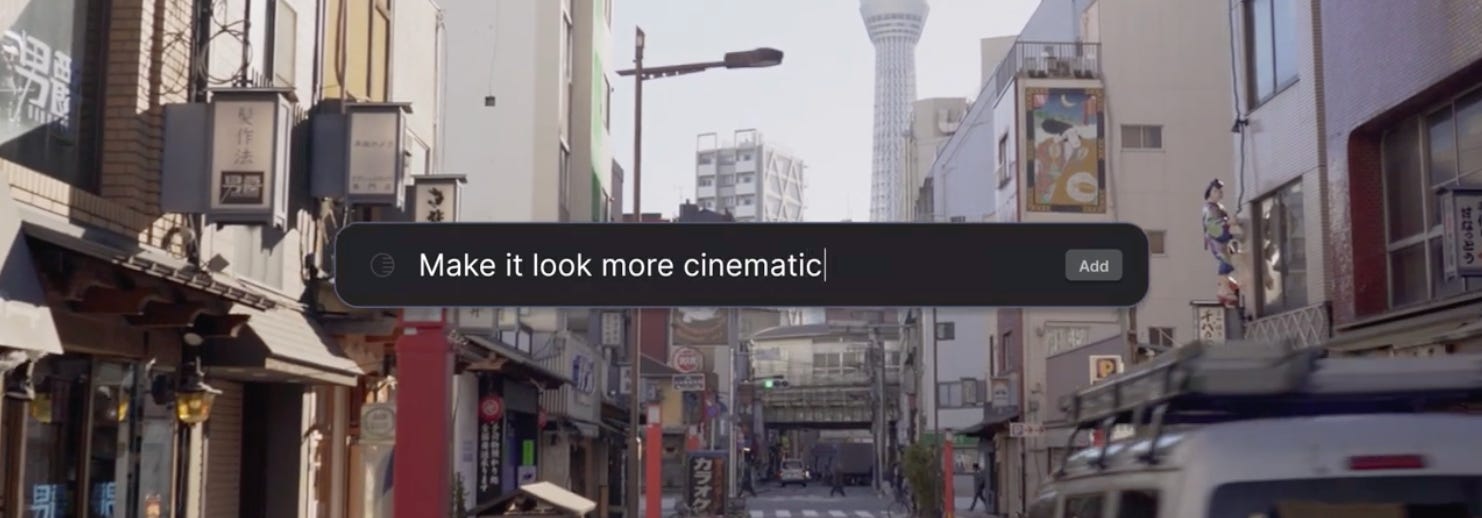
When AI text-to-video tools took off last year, users flooded to the platforms. New video tools were popping up left and right.
Hollywood began to panic, stock footage libraries braced for impact, and voice actors, motion graphics studios, commercial directors all began looking over their shoulder.
The fear was simple: if you can generate it cheaply, why would anyone pay for the real thing?
Last week, OpenAI answered that question. The company announced it’s shutting down Sora, its flagship AI video generation app, at the end of the month. This from the company that was supposed to be leading the charge in AI video generation.
So what happened?
AI Video Meets The Attention Economy
When users first flocked to AI video tools, the possibilities felt genuinely thrilling. People were pumping out content as fast as the platforms could render it. But novelty isn’t a long-term retention strategy. All that video cost money to create – subscription costs, credits, compute time. And it needed somewhere to go.
Users of these new tools uploaded to YouTube, posted to social media, and even started work-for-hire services around their output. A very small percentage rose to the top and started seeing return on their new venture. Within this percentage are a handful of creators who have found a specific lane like high-end commercial work, niche storytelling or avatar creation, but for most, the return-on-investment never came.
Here’s what I’ve believed for a while, and what the data is now confirming: audiences don’t engage with AI video the way they engage with human-made video. We are wired for authenticity. We feel the difference even when we can’t name it. A beautifully rendered AI clip holds attention for about as long as a magic trick – impressive once, but forgettable immediately after.
Supply flooded the market, but demand never rose to meet it. YouTube is now actively developing filters to reduce AI content in feeds, which raises the barrier to entry even further for creators trying to build something new, real and creative from video generation.
The bottom line is brutal and simple. There is far more AI video content than there is appetite for it.
Using Sora As The Temperature Check
Sora wasn’t some scrappy startup that ran out of runway. This was OpenAI, the most-funded, most-hyped AI company on the planet, offering what was arguably the most technically impressive video generation model in the world. They had inked a $1 billion licensing deal with Disney. They were the most realistic, the most accessible, the most well-resourced player in the space.
But it still wasn’t enough. Their worldwide user count peaked at around one million… then collapsed to fewer than 500,000. Meanwhile, the app was burning roughly $1 million every single day, because generating video at scale requires a breathtaking amount of compute. Every clip a user rendered was drawing down a finite supply of chips that OpenAI needed elsewhere.
Here’s the detail that tells you everything: when OpenAI made the call to shut Sora down, Disney – their $1 billion partner – found out less than an hour before the public announcement.
And Sora isn’t an anomaly, it’s the canary in a coalmine for one of the first AI bubbles to pop.
The Bigger Picture
The same supply-demand imbalance is forming in AI voice acting, AI music generation, and AI-driven vertical storytelling. The pattern is consistent: tools launch, novelty drives an initial wave of users, output floods the platforms, audiences don’t follow, creators lose momentum, usage drops. The pendulum swings back.
That’s not a condemnation of the technology. AI-generated video has real, lasting use cases. And the players who identified specific, defensible niches early are in a genuinely strong position. At StoneAI, where I’ve spent the last eight months, we’ve seen real traction doing exactly that: offering a lower-cost, high-quality alternative to shooting recreations for unscripted television. History docs, true crime, dramatic reenactments — scenes that were previously cost-prohibitive to produce are now achievable without a full crew and location budget. And audiences don’t expect authenticity from recreations – something that was, by nature, inauthentic to begin with. The storytelling gets richer, and the client gets more for less.
Educational content is another clear winner. When the goal is information, not connection, AI video does the job well and cheaply. Nobody needs a human presenter to explain how a mitochondria works.
The technology isn’t the problem. The mistake was assuming every use case was equally viable. The use cases that are working share something in common: a specific problem, a defined buyer, and no dependency on an audience choosing them over a human alternative.
What Actually Has My Attention
The AI tools I find most compelling right now, and feel genuinely durable, are trying to accelerate creative process instead of replace creative output. Tools that help filmmakers log and sort footage. Platforms that ingest raw material and surface what matters. Software that transcribes, organizes, and structures the overwhelming volume of media that productions generate every day. It’s a less shiny arena than Super Bowl commercials and Tilly Norwood, but it feels powerful, and inevitable.
The distinction matters. Creative output tools need an audience, while workflow tools just need a buyer. One has to win the attention economy, the other just has to save someone three hours on a Tuesday… a much easier feat.
We live in a world where the volume of data grows exponentially. The tools that help people parse through that data, rather than add to it, are the ones solving a problem that isn’t going away.
That’s the bet I’m making. The fear cycle got the technology right and the market completely wrong. That gap is where the real opportunity lives.